Pioneers and Predjudice
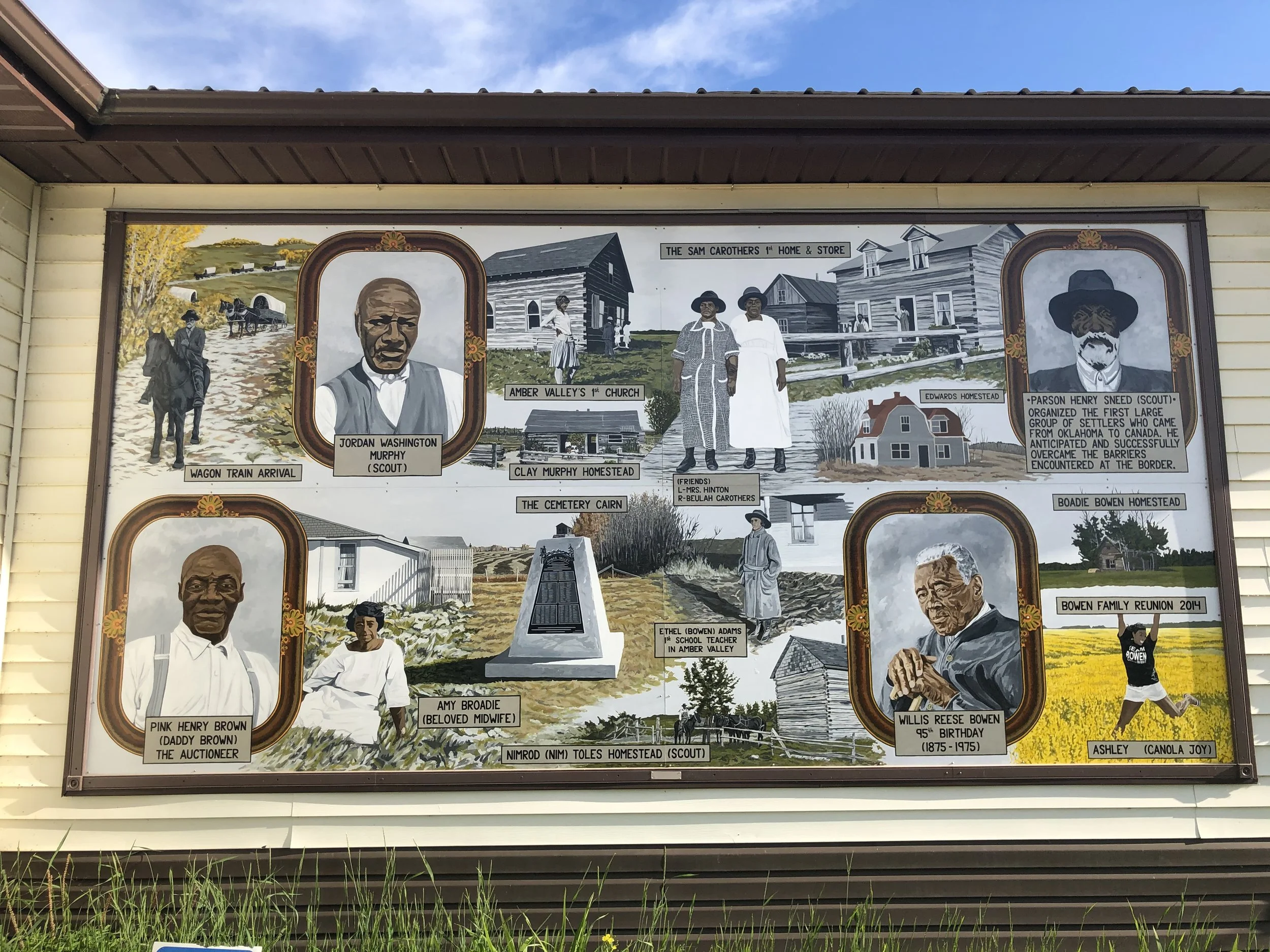
I recently spoke about Amber Valley pioneers, black settlers from Oklahoma and Texas who came to Alberta between 1910 and 1912, a group to which I am directly connected. Their unique story is significant in Alberta’s history. I explained there were no later waves of black pioneers from the U.S. because the opportunity closed quickly. In my research, I found this 1911 quote.
“Our Board take the ground that the fact that the presence of colored people in the homestead districts is keeping out the most desirable class of white settlers, and that this influx, if permitted to continue, will inevitably introduce into Western Canada a problem which was given, and will continue to give, the United States more trouble than any other question they have there, is ample reason for asking the Government to afford us protection by excluding these people, without opening up any contentious ground as to the desirability or undesirability of the negro settlers.”
In other words, “We want new people in Alberta, just not these kinds of new people.”
This quote, from a petition by the Edmonton Board of Trade, called on the federal government to ban black immigrants from entering Canada. As a result, the Wilfred Laurier government passed an order-in-council barring black immigrants from arriving in Canada. For me personally, this serves as a sobering reminder that I exist only because a small window of opportunity was seized by a handful of brave people willing to risk everything for a better life north of the border.
Is history going to repeat itself?
Fast forward to today: it’s hard not to notice that, even over a hundred and twenty years on, the idea that diversity is a threat keeps surfacing in Alberta’s politics. The Alberta government is planning a referendum to curb immigration, with the premier arguing that immigrants are overloading the healthcare and education systems and blaming Ottawa. While the framing has changed, the ingredients mirror that 1911 petition—an established majority scapegoating communities for self-inflicted issues. Even though our premier sought federal support for more immigrants in 2024, recent announcements show it’s not for all kinds of immigrants.
I am old enough to remember when Premier Ralph Klein would frame a budget discussion around how the "Henrys and Marthas" would manage their household budgets, and the expectation that the provincial government should mirror that approach when conducting the business of government. His chosen archetypes of “severely normal Albertans” helped people understand who he was talking about in a way that was relatable at the time. Whether you agreed with it or not, we ought to return to how the Henrys and Marthas managed their homes. First of all, they would manage their household economics responsibly and not spend beyond their means. If they encountered a problem, they would apply their best efforts to solving it and spend very little, if any, effort blaming someone else for their woes. The Henrys and Marthas were not whiners. If they came across someone on the side of the road who needed help, they'd stop and do what they could to get the stranger up and running again. Again, they would do so without whining about the federal government's decisions. They would do the right thing and not wait for a government to ask them to do it. I’ll admit the possibility that I’ve romanticized Martha and Henry. They didn't have to grapple with the 2026 economic or political realities; maybe they did the exact opposite of what I’ve envisioned. But I have lived in this province my entire life, remember the conversations of the adults around me, and I believe my characterization is appropriate. The government of the day valued their perspectives.
Today, however, it seems the UCP government and the conservative movement in Canada relate more to the “Dans and Kevins” found on Alberta’s golf courses—the types who complain about supporting their families while playing the back nine. Although Dans and Kevins live in the same province as Henrys and Marthas, their priorities differ, but they currently have the government's ear.
I don’t believe Dan and Kevin mean ill, but their perspective could broaden with a look beyond their usual circles. Every morning on 107th or 111th Avenue in Edmonton, I see new Canadian parents, bundled up for their first prairie winter, shepherding children onto school buses. I wish Dan and Kevin could share lunchrooms with hotel workers from around the globe—those who clean their rooms or serve their breakfasts during business trips. Their kids deserve education and support, and when these families fall ill, we, too, should offer care. Of course, there should be room for discussion about what the right number is for new Canadians, but that discussion needs to be fact-based, contextual, and moral, and not cater to scapegoating arguments.
I see the spirit of the Amber Valley pioneers in the faces of the new Canadians that I’ve worked with and lived near over the last two decades. They belong here. While diversity does bring complexity to our health care and education systems, we owe new Canadians creative, entrepreneurial solutions. That’s the Alberta spirit. Like Henry and Martha of yesteryears, Alberta can stop and support those along the way.
What became of the Amber Valley pioneers who succeeded at entering Alberta between 1910 and 1912? They worked hard, and their descendants became businesspeople, educators, lawyers, athletes, actors, and musicians. One of them helped build the LRT system in Calgary. One of them is typing these words. We helped build and continue to build life here in Alberta. I believe in immigrants, and I know they will bring strength, ingenuity, and vision to our province's future. That’s why, if a referendum arises to restrict new Canadians, I will vote against it—for both historical and personal reasons. Alberta has always been built by those willing to seize opportunity. Let’s keep our doors open.