A Tale of Two Birds
“See people for who they are becoming. Not for who they were.” -Bob Goff
Is Colombia safe?
Cities have reputations—some good, others infamous. Reputation creates an emotional gravity for places, objects, and people. A gravity that can be difficult to escape. I’ll never forget my recent experience in Medellin, Colombia, a city marked by its violent history. In the early to mid-nineties, it earned the tragic title of the world’s murder capital, averaging twenty murders a day.
“So…I bet back home, you probably had a lot of friends and family telling you to be careful or even go as far as tell you not to go to Colombia because it’s not safe. And certainly not to Medellin.” Locals said this to me more than once during my visit to the region. And it’s true: people in my life who care about me expressed apprehension about my traveling alone to this part of the world.
Reputations help distill information quickly and often guide us toward safety, sparing us the need for elaborate deliberation. Our species’ survival has depended on reputation management: "That mother bear has a reputation for attacking intruders near her cubs...so we take the long way around." In this scenario, the hiker, guided by reputation, enjoys a peaceful evening around a campfire. It’s a good outcome.
But what happens when a company, person, or city works to change its reputation? Are we willing to question our assumptions and recognize their efforts? Rebuilding a narrative is hard when negative histories dominate, yet progress demands we see beyond the past and recognize growth.
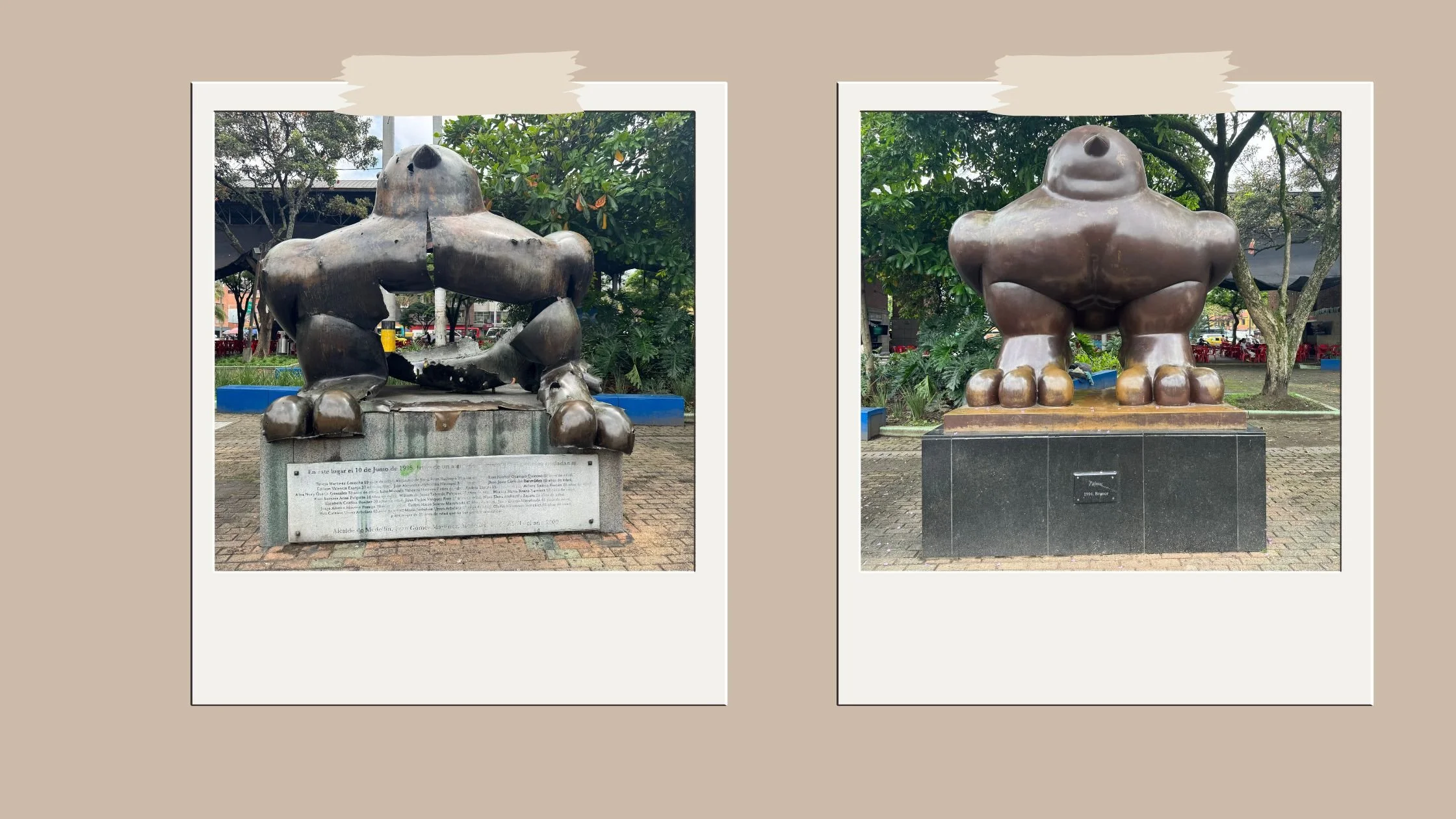
While touring the Plaza San Antonio, a public square in Medellin, my attention was directed to two remarkable statues of giant doves. Both doves were crafted by the renowned Colombian artist Fernando Botero. I stood in front of both of them. The dove on the left was clearly destroyed, jagged, and shrapnel-torn. On June 10th, 1995, 10 kilograms of dynamite had been placed inside the statue and detonated, taking the lives of 29 souls and wounding over 200 other people who had come to the square to celebrate. Many groups took credit for the act of terrorism, but to this day, the guilty party remains a mystery. But pain is never mysterious; anyone who lost a loved one that day likely remembers that loss with vivid details. It was explained to me that initially, city leadership wanted to remove the statue and move on as quickly as possible.
Botero opposed removing the piece. He no longer saw the dove as something that belonged to him, but as a part of the city's collective memory, ensuring that the lives lost that day were never forgotten. He feared the artistic amnesia that might wash over the culture, leading to a tragic collective forgetfulness. The artist also famously stated that he wanted the destroyed dove to remain as a witness to the “barbarity” of that time in history and a monument to the imbecility of the values of those who use terror as a tool.
A few short years later, Fernando Botero donated the second, identical resurrected Dove to stand beside the old one. He called this statue “Pájaro de la Paz”, the Bird of Peace.
Standing before these two monuments, we encounter both the painful legacy of Colombia’s past and the hopeful message of renewal. The story of Medellin, like the doves, is one of transformation—a city moving beyond a violent history toward peace and possibility. This invites us to reconsider how we judge a place: not only by where it’s been, but where it’s going. The statues invite us not to stand in judgment of where the city has been, but where it’s going.
Back to the original question. Is Colombia Safe? I can’t answer that question in a way that will satisfy everyone’s risk tolerance. But using the two birds as examples, I would say that my time in Medellin was defined by: friendly, hospitable people; transformative public transit; inspiring works of art; delicious street food; world-class coffee shops; and adventurous experiences. I had a great time! Someone else could easily choose to see something else.
This is the story I’m happy to tell: that there is tangible, statistical proof that even in cities that have experienced dark chapters in their history, they can write new, hopeful narratives. May we work through the sense of risk and experience the reward of walking alongside these communities as they blaze new trails of hope.